Category: Projects

  • Anatomy of a song – Sun Tunnels “I Guess Not”

    Eds. note: this post is the third in a series of posts about songs from my last EP.

    A theme I’m playing with in my latest EP Old Haunts Volume 1, and for that matter any other volumes I might make, is how recordings can collect pieces of sound or ideas from different places and times and then mix them together into one moment. “I Guess Not” is in some ways the newest song on the EP and in other ways not so much.


    It began as a microcassette scratch recording of guitar and melody from May 2003. I have tons of these “proto-songs,” but since tapes are an annoying medium I didn’t listen back to most of them until months or years later while at the same time capturing them in digital form, at which point I would decide if they had anything good in them or not.

    Most of these proto-songs are very bad but some will have a hook or at least something interesting going on. Among this subset most don’t become fully realized songs, but a few like “I Guess Not” do. An even smaller subset of those go on to become “real” recordings.

    I started this recording in September 2008 in a practice space with drummer Terry Kyte, who was in Open Choir Fire at the time. I had sent him a demo a few days earlier, then we met up I think in their space on Capitol Hill and ran through a couple of takes with me on guitar and him on drums. His part and performance were awesome.

    I think that practice space used to be here

    A couple of months later my friend and erstwhile bandmate Sugar McGuinn came to my house and recorded bass on top of what Terry and I had done. He also played a few takes and was great.

    Then nothing. I think in my head it had been a good attempt but not worth pursuing, either because I didn’t mic the drums well, or because I didn’t like the lyrics much, or because I didn’t get a good guitar take. So it sat on a hard drive for years and years… til last Summer, when I was looking for recordings to finish and came across it again.

    At the time my wife and I had recently become a “waiting couple” for adoption, and one piece of advice we got was to find projects to work on while waiting. I picked “finish some old recordings and put out an EP as Sun Tunnels” as one project. Also I started occasionally running around Greenlake while the weather was nice, and I’d listen to mp3s of stuff while running to decide what was worth working on and what specifically needed to happen to finish each song.

    “I Guess Not” needed new lyrics, a second guitar to join (and partly cover up) the one I’d recorded along with Terry (the guitar and drums bled together in the audio and so couldn’t really be separated), maybe some harmony vocals, an instrumental solo of some kind during the interlude, and better mixing.

    In the end it got all of those things, as best as I could. Lyrically I kept some of the original lines from what I wrote in 2008 (or whenever it was) but bent them toward a new theme. I think the song now is about smartphones and how weirdly hypnotized we are by them in a way that might seem extremely strange to an observer from 2008. I think about it most every day on the bus how weird it is. We’re all staring at our hands.
  • Arduino Morse – pt. 2 – only Morseo

    In my last post I wrote about a Morse code project I wrote for Arduino. I have a few additions to make on that subject..

    Firstly, I rewrote the main bits of this code as a library, and renamed it Morseo (pronounced “more so.” It’s like a pun). It’s on GitHub now as well.. I’ll probably delete the old project.

    In the course of turning it into a library I learned a few things.. primarily, how to turn it into a library. Arduino’s guide to making a library uses as an example a program that flashes, wait for it, Morse code. That was a fun coincidence, though I would note their example only flashes “SOS,” and mine does more than that. Still, kind of annoying. I’m under no impression that this project is unique, but I’d prefer it not to resemble the boilerplate.

    Secondly, Arduino is coded in C++, not so much C, as I asserted in my last post. Duly noted.

    Finally, Arduino includes a serial library for writing messages back to the PC host you’ve plugged it into via USB. Somehow I neglected to know this when I developed Morseo, which meant I had exactly one LED to debug with. This made debugging a lot of fun — seriously, it was a fun challenge — but more tedious than necessary. Next time, I’ll use the serial library to send myself messages, and I would hope anyone approaching Arduino programming for the first time knows this at the beginning.

    Up next: I have a wifi adapter now, I think a good next step would be to flash statements from a Twitter account or something.

  • The Guitar guitar

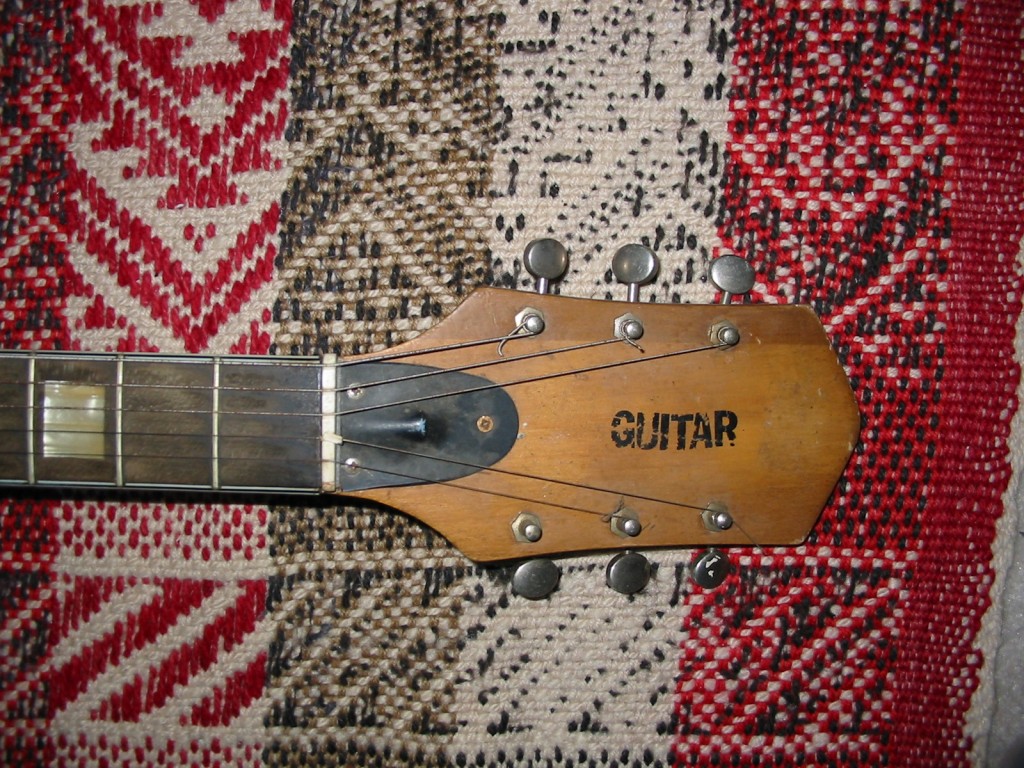
    It’s time to tell the story of the Guitar guitar. And then give it away, as it’s time it moved on. Read this then if you want it* let me know.

    (UPDATE: the guitar has been claimed by Jim from Stuporhero.)

    In early 2002 I was in a band of sorts with a couple of dudes including Scott Schickler on drums. I knew Scott from a very short-lived Delusions side project that we’d both been in, and of course Scott was the drummer in seminal Sub Pop signee Swallow.

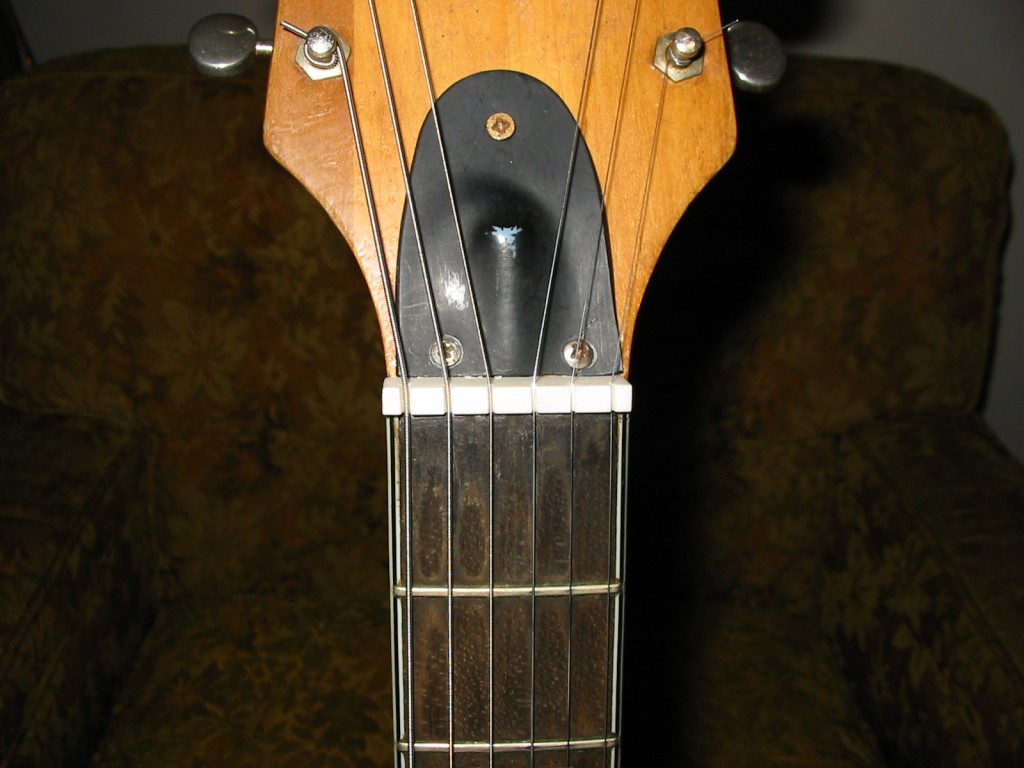
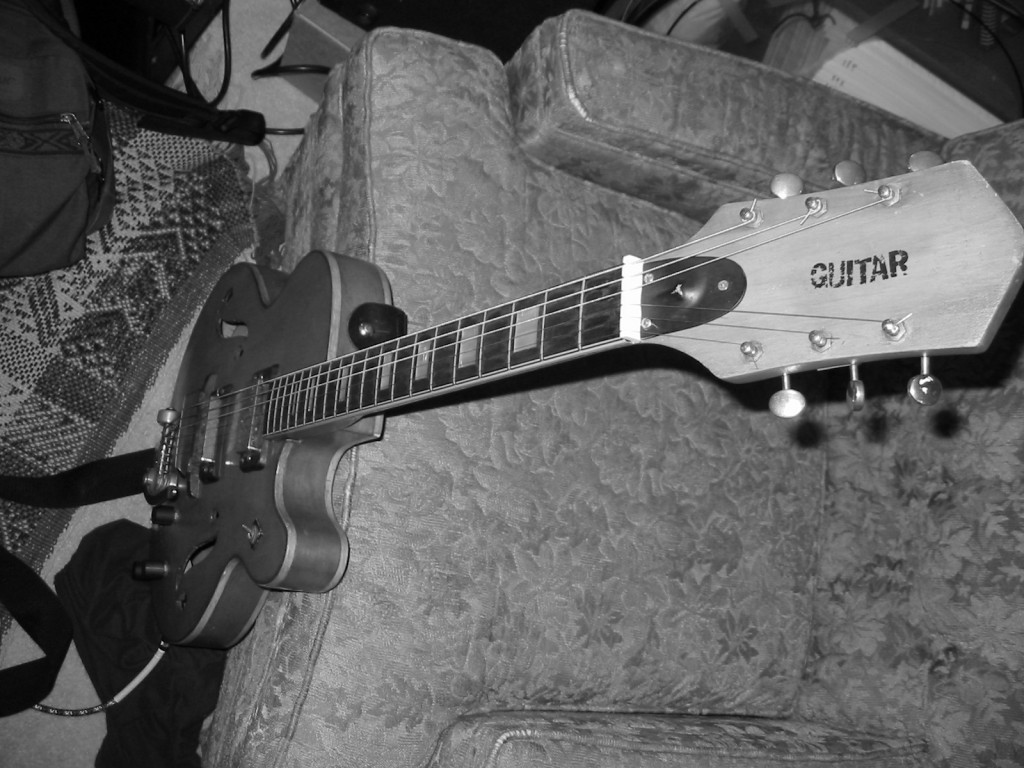
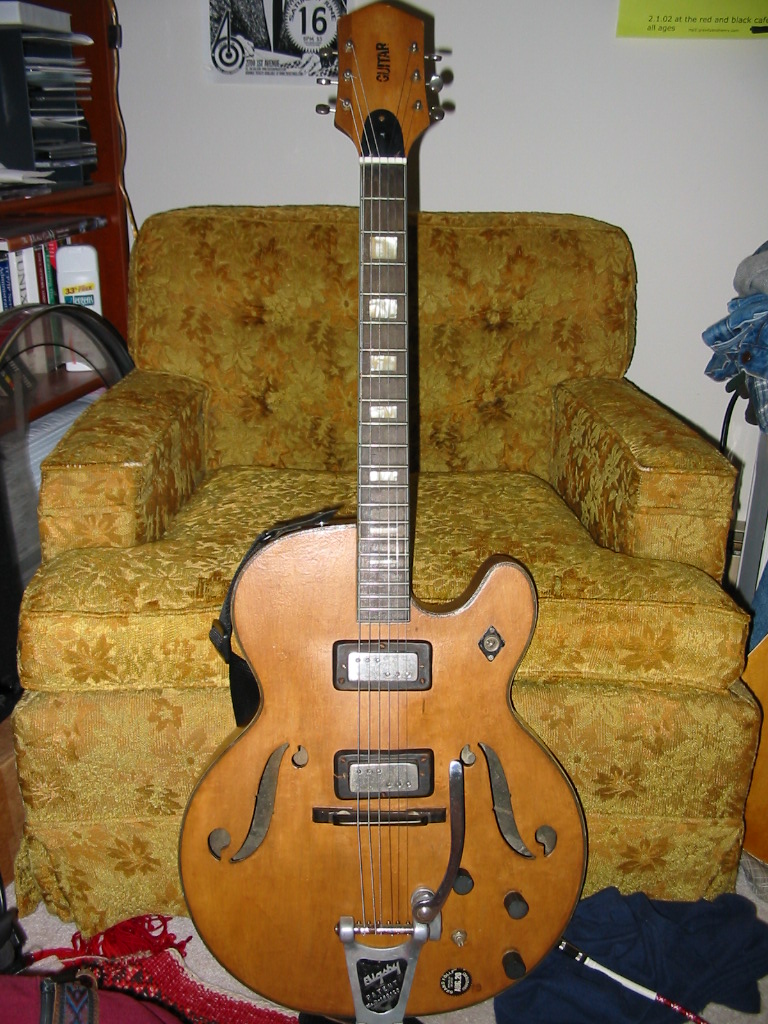
    About the time our band broke up Scott gave me this guitar:

    and then told me what happened.

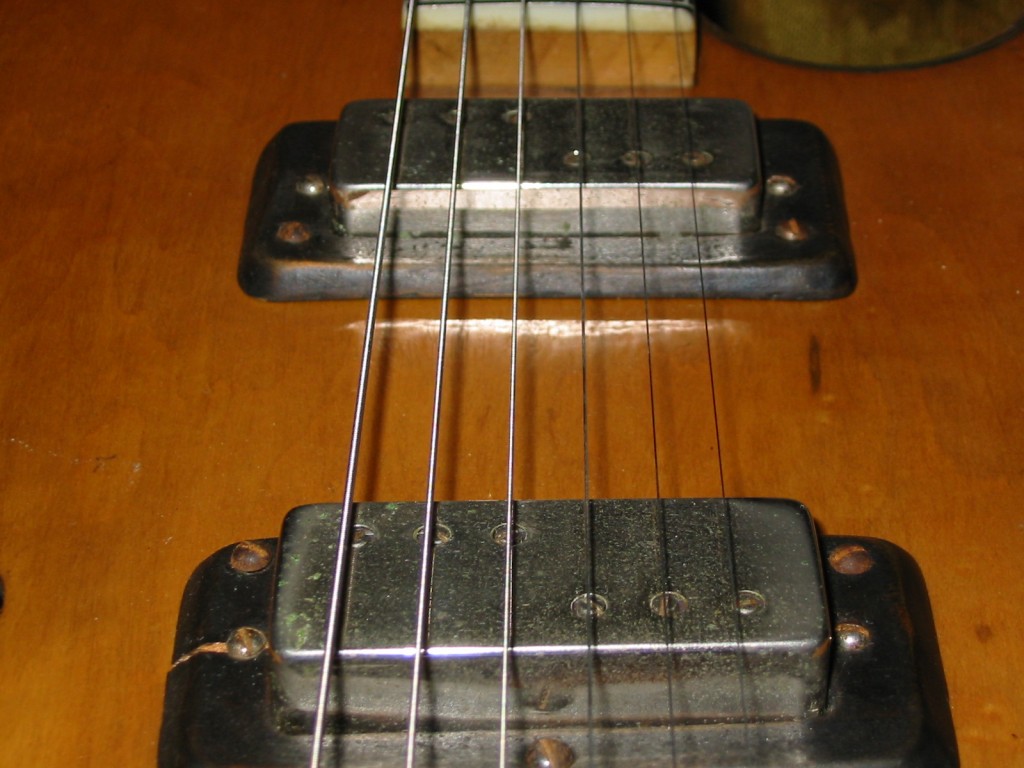
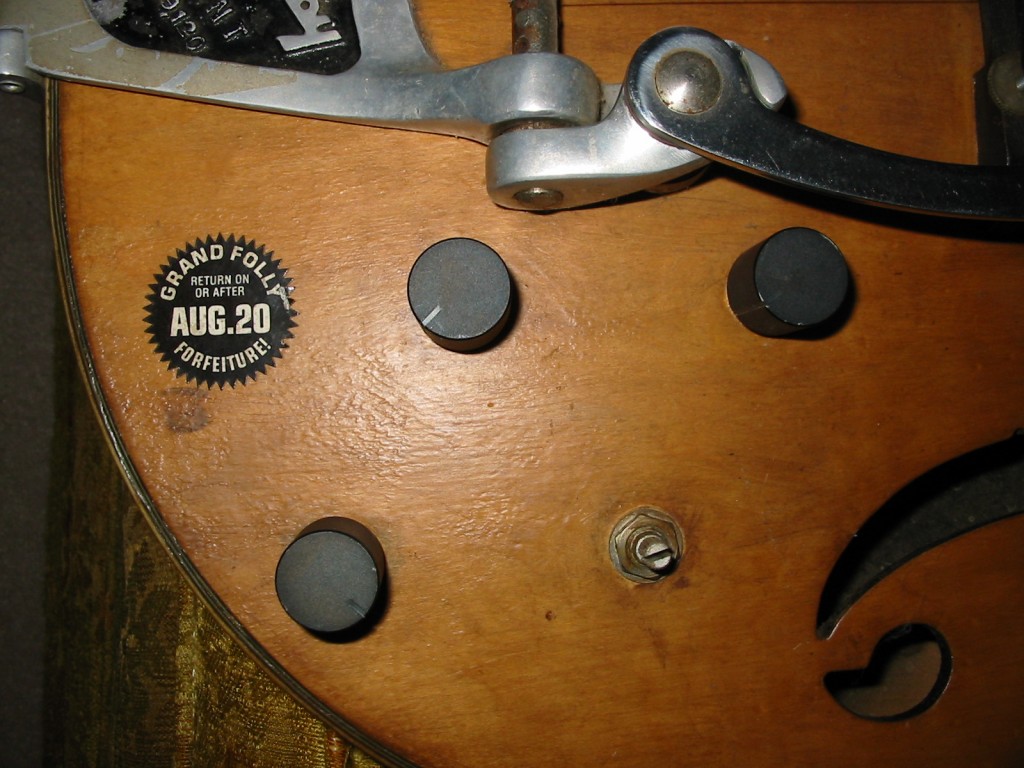
    The guitar had once been black and belonged to a Tom W, who kept it in his dorm room at Terry Hall in the early 80s. Scott and future rock star Mark A. would visit and rock out on it. Then Tom stripped and shellac’d it, so now it’s shellac’d. Very much so. The original make and model are no longer discernible, it has been rebranded “Guitar.”

    I used to think it was a Harmony Meteor from the early 60s, and it might be, or a Silvertone of some sort, or who knows. Do you know?

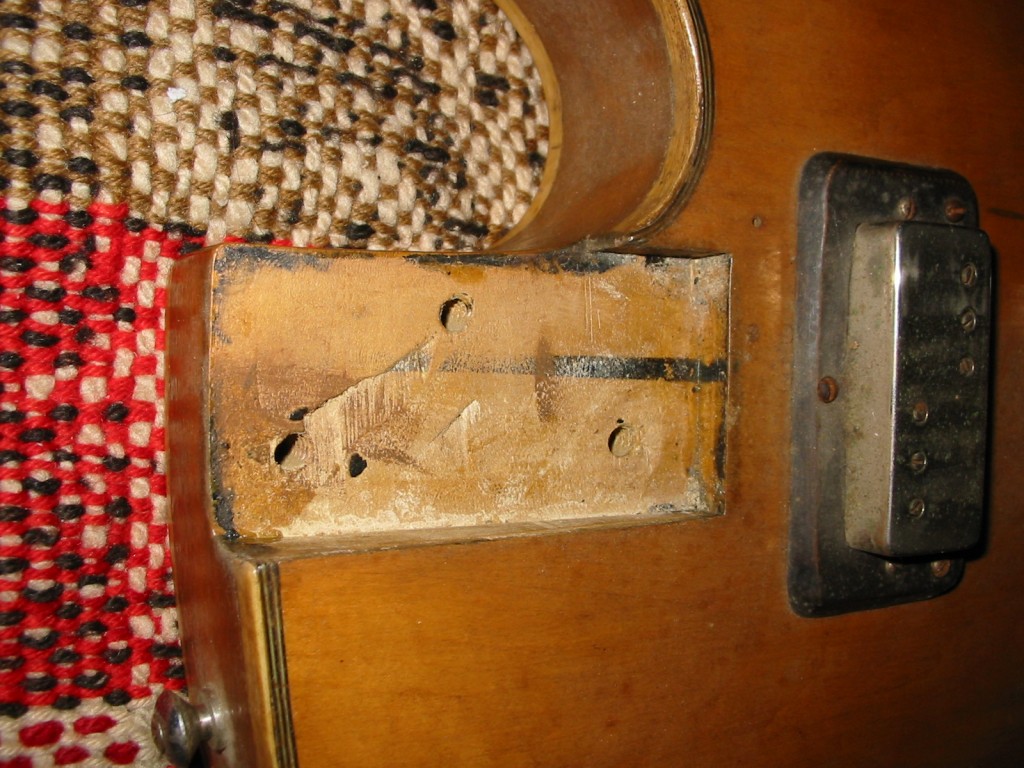
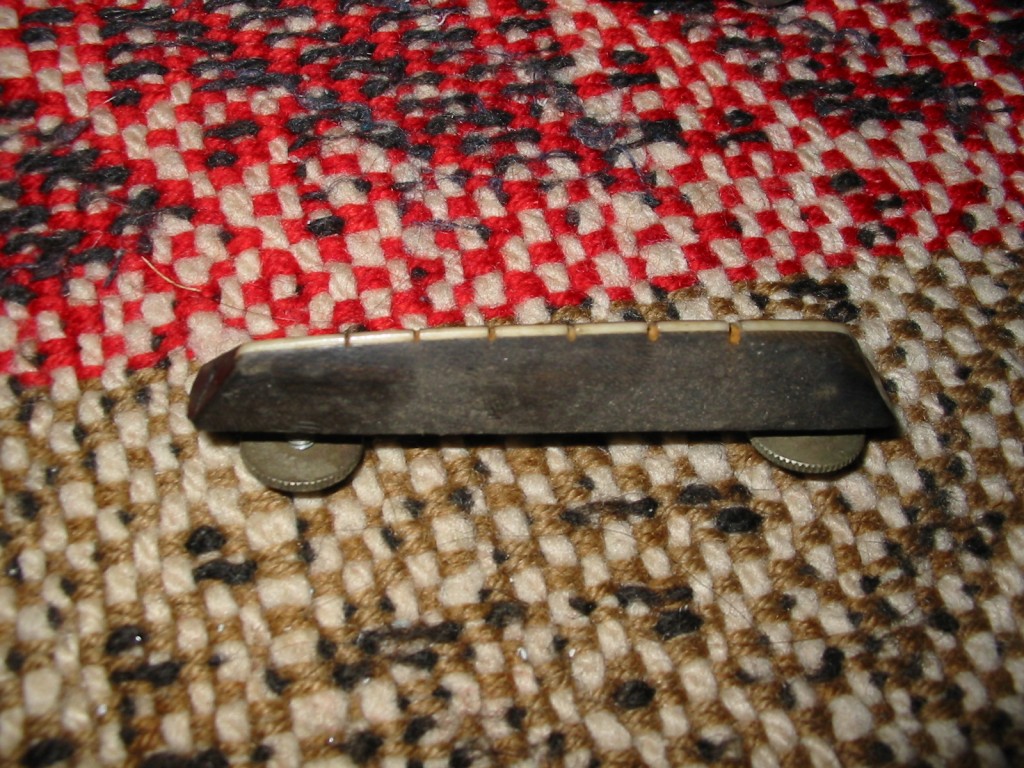
    It came to me with a ratty nut so I cut and installed a replacement. It was dirty and the strings were rusty so I cleaned it and replaced those. And the rear strap button was broken off. The only major flaw I can see in it is that the fretboard has split from the neck a little and someone tried to fill the gap with wood glue (probably me).


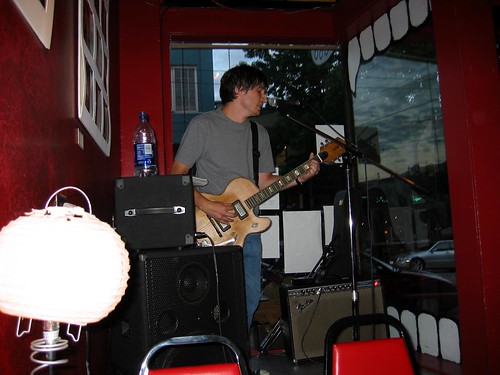
       For a minute there I thought this would be my main squeeze instrument, but I think I gigged with it exactly once.

    You can see I’m really feelin it there. After that I recorded it for one song on my first album. I recall micing it while also playing it through an amp and micing the amp.


    I recorded it again for bits of another song on the next album. Probably miced it the same way because it just seems like the thing to do.


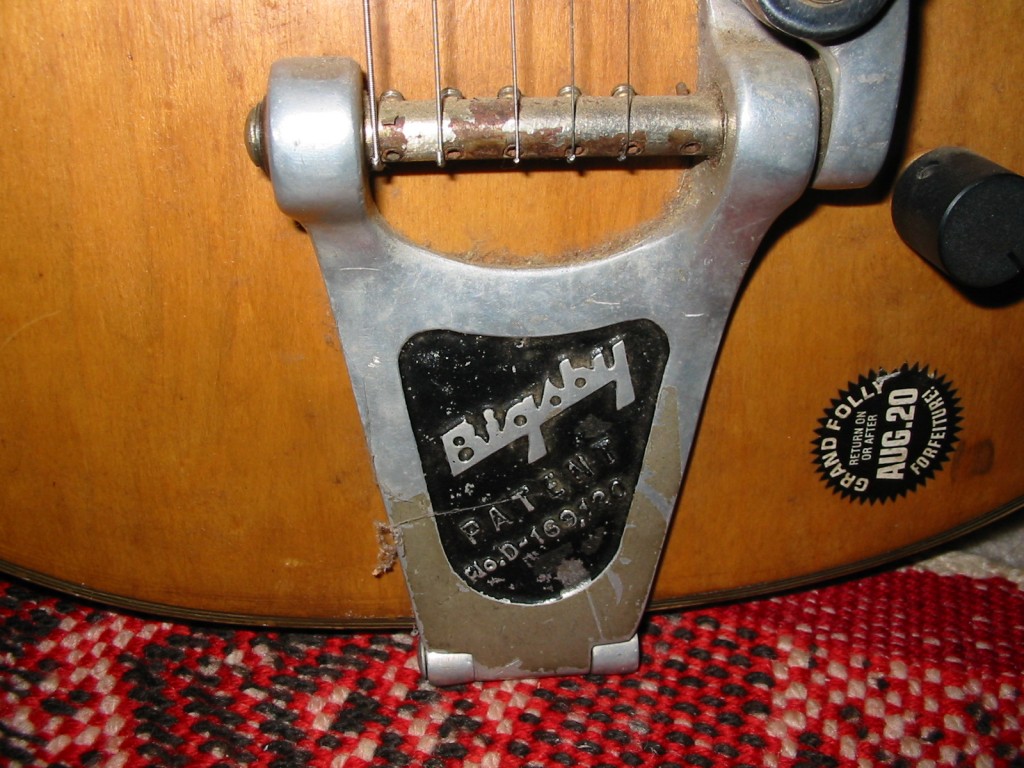
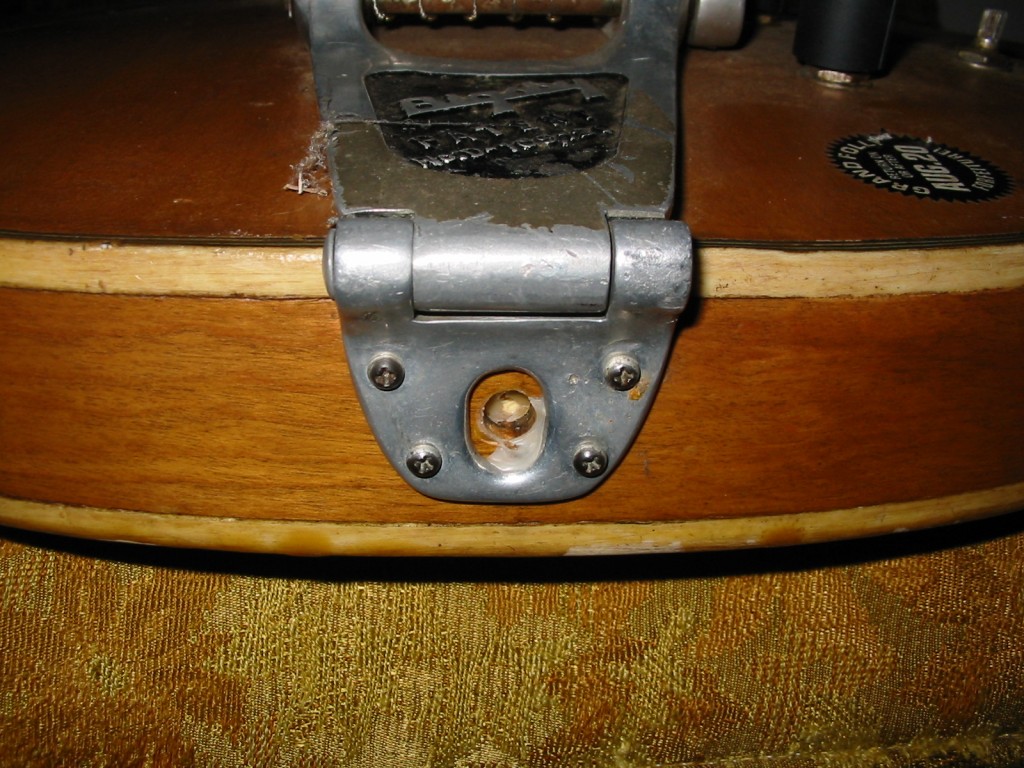
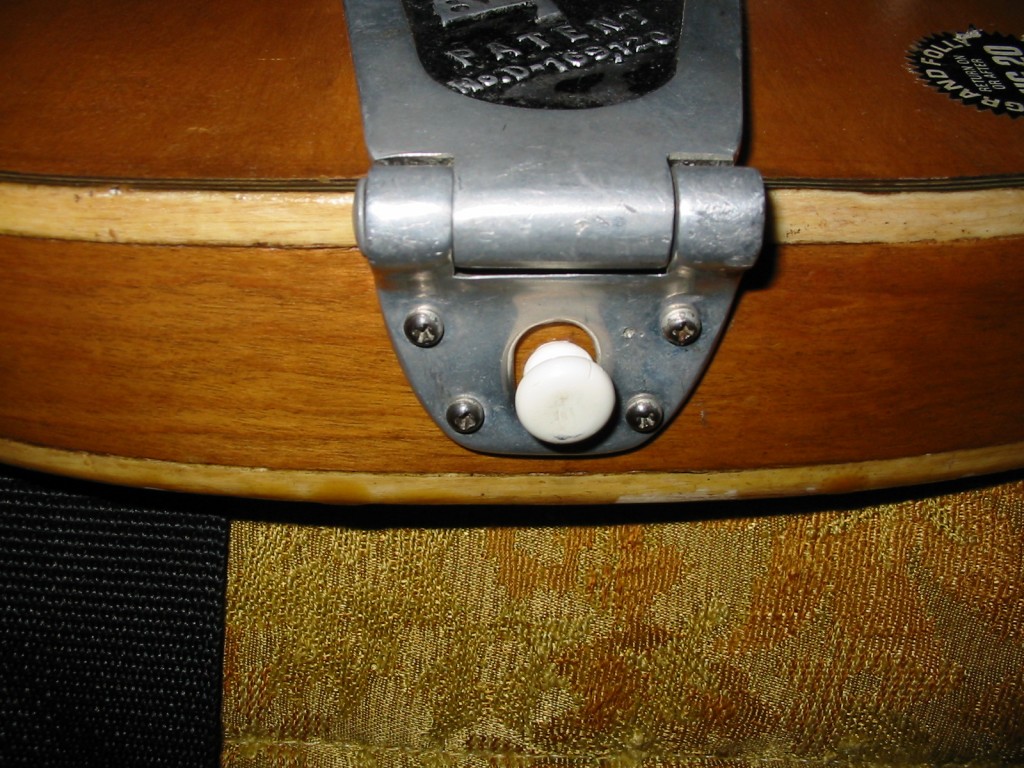
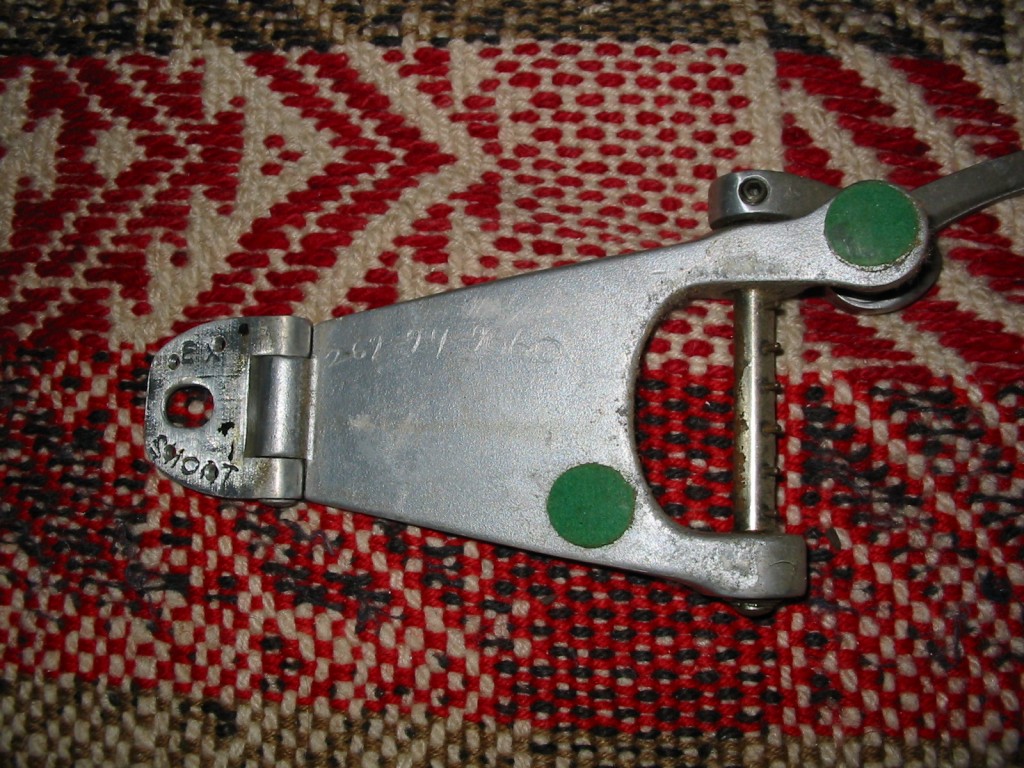
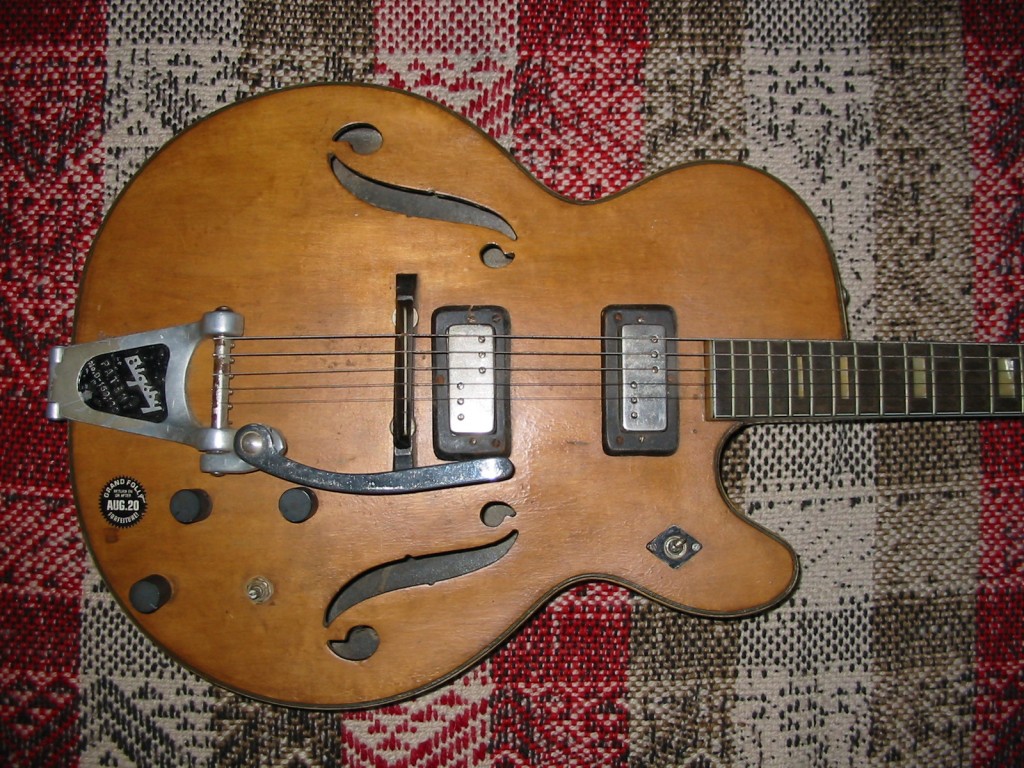
    Then later I thought I’d try improving the Guitar so I swapped out the Bigsby with a stationary tailpiece. Not sure why I thought that would help.

    And now years later it’s today, and I don’t ever play it, and I don’t feel like finishing the restoration (remounting the fretboard). I don’t even have a case for it, it’s just waiting to fall over onto something hard. I asked Scott if he wants it back, and he doesn’t. So who wants it?


    * and you live nearby, and you’re not crazy, and I know you already

  • Summer projects

    It’s September already, I may as well mention the stuff I’ve been working on this summer. Here’s the first thing:

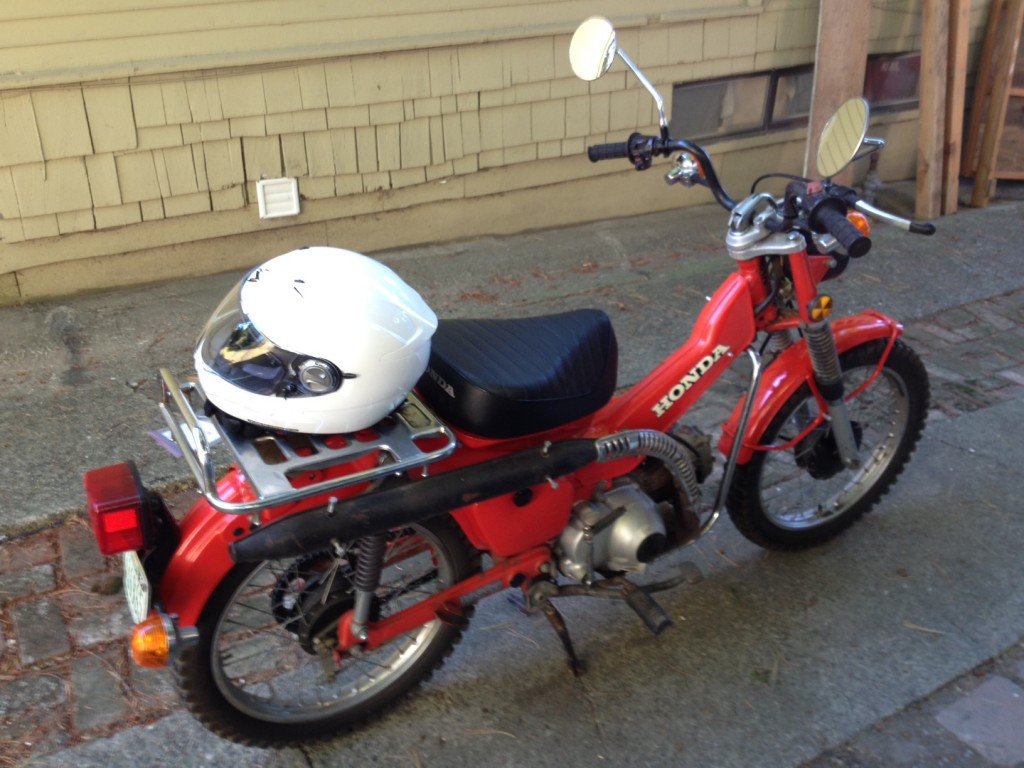
    I’ll have a long wonky set of pages soon describing what this is all about, but to summarize I’ve been restoring a 1979 Honda CT90 and becoming a bike dude, within limits. So far it’s been a lot of buying parts and reading about solvents and oils and polishing creams.

    The other project is less tangible, I call it “tour simulation.” It’s meant playing a lot of open mics and small shows mostly out of town, trying out my new songs and a selection of old ones that work well solo. It’s been fun. Tonight I’m in Centralia at the Hub, and a few weeks ago I was at Toorcamp. Check out my Sun Tunnels Facebook page to see photos from that, it was weird.

  • Fake iRig update

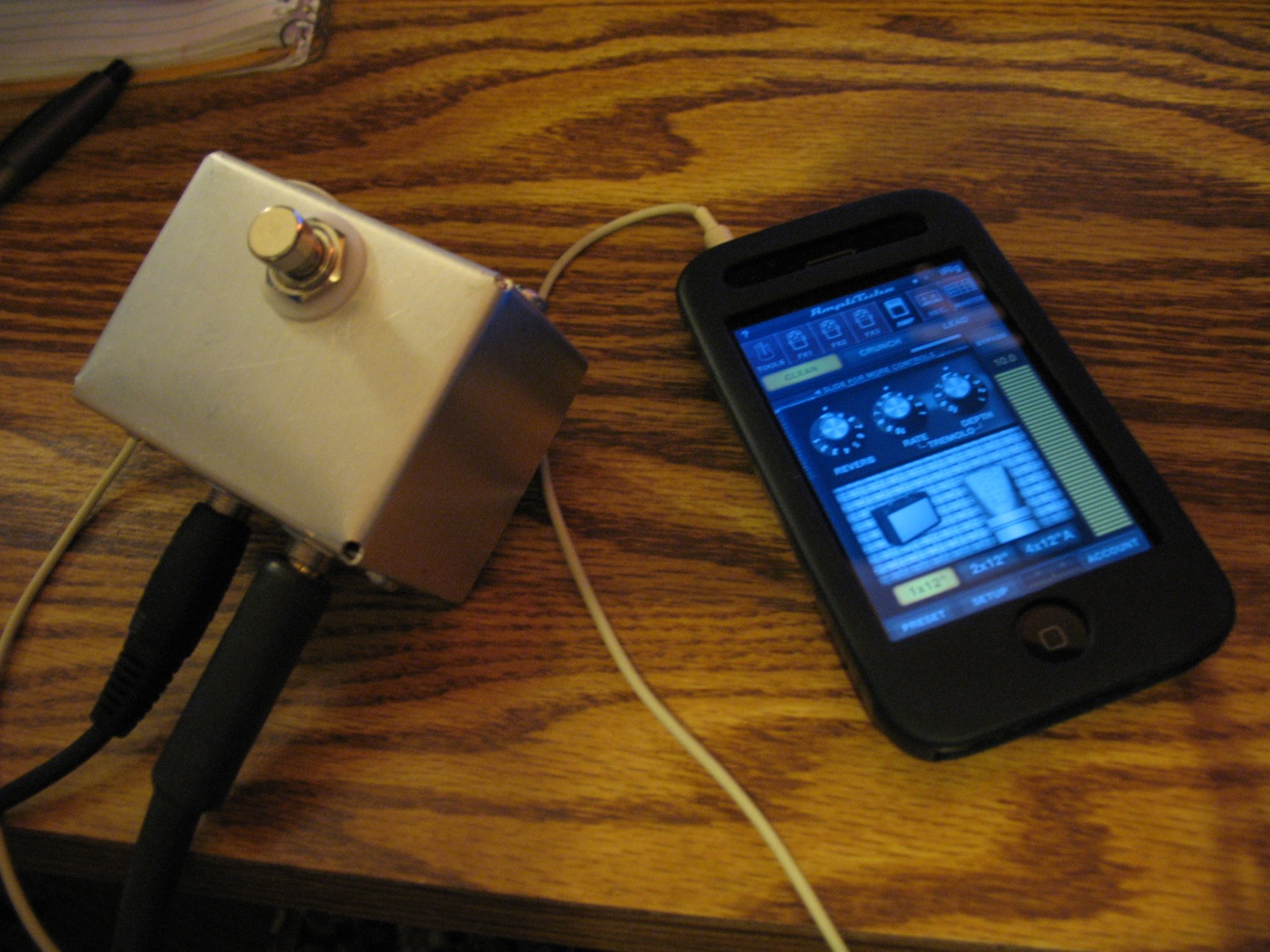
    Finished fake iRigAs mentioned in a previous post, I was working on making an iPhone/guitar interface with a bypass switch, not unlike the recently-announced iRig Stomp by IK Multimedia. I made something that worked, more or less, and wrote a page about it, and then found a lot of information online by others who have looked at the problem and interpreted it far better than I had (the page on this is now private til it’s better).

    My error was mainly in thinking this is a simple passive circuit with no components besides connectors and switches. It turns out that’s not true at all, that there is in fact a preamp and some passive filtering going on in the iRig and other phone/guitar interfaces. I didn’t think active circuitry would be present without a battery, but it turns out that the iPhone’s mic connection puts out 2.7 V in order to polarize condenser mic elements. The iRig seems to use this to polarize a JFET in its preamp.

    So, long story short I need to spend more time on this. Here’s a thread I found recently I wish I’d seen earlier, it explains a lot.